It was March of 2023 when we started to build our first raised bed. With the last frost day coming at the end of April we wanted to make sure we had enough time to get it complete and in place to move our onions outside when they were ready. We decided on building two 12-in x 8-ft x 4-ft beds with extended side posts that would support removable fencing panels to keep cats and rabbits out of the garden but also allow for easy access to work on the garden from any side.
Here is the process we went through in building our first bed-I hope that this can help inspire your build process for your own bed as I looked at many designs when coming up with this and my husband and I put all those ideas together to inspire our own bed.
These are the materials we needed for one bed (I ordered double of the wood since we were going to be making two beds)
- 7 2-in x 6-in x 8-ft Cedar Green Deck Board (4 for the long sides, 2 cut in half for the short sides, and 1 for two side supports that would be used to brace the fencing)
- 2 4-in x 4-in x 8-ft Cedar Green Deck Board (for the corner supports)
- 10 1-in x 2-in x 8-ft Whitewood Furring Strip (to make the fence panels)
- Chicken Wire (to make the fence panels)
- Wood screws
- Saw
- Drill and bits to predrill holes to prevent cracking the wood
- Staple gun and Staples to secure the fencing to the panels
Of the 7 2-in x 6-in x 8-ft Cedar Green Deck Boards four were left long for the long sides, 2 were cut in half to make four 4-ft boards for the short sides, and one was cut in to two 3-ft boards for supports on the long sides and fence panels. The 2 4-in x 4-in x 8-ft boards were each cut to make four 3-ft boards for supports in the corners and fence panels. With all that cutting done it was time to build the bed. Four screws were used to secure each side to the center supports. Here are some pictures of the process:
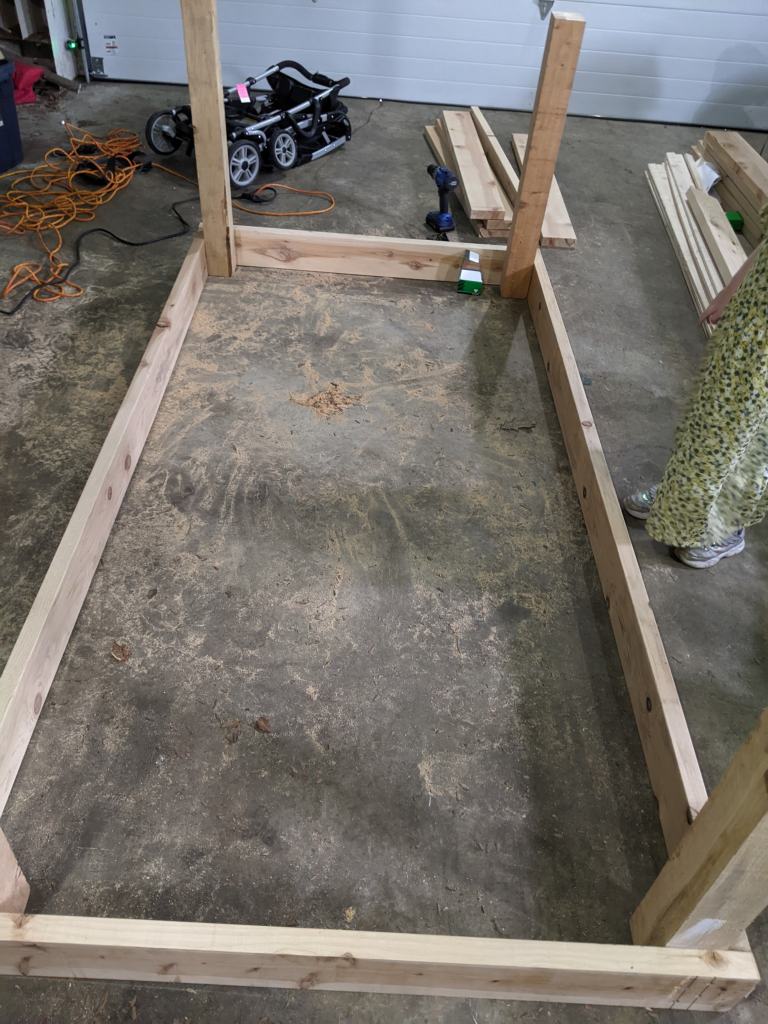

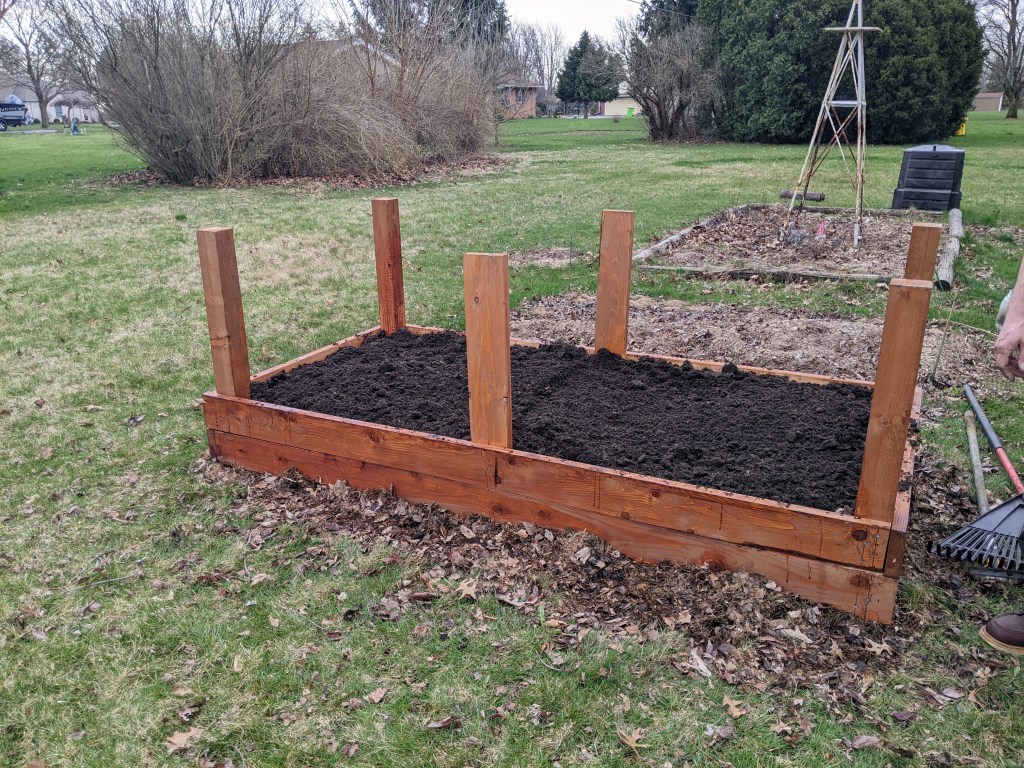
With the bed complete it was time to prep it for being outside in the elements. We treated the inside with linseed oil and used a water-soluble sealant on the exterior. That process took a few days as the linseed oil needed to dry completely between layers. Then it was ready to move outside and fill with soil.
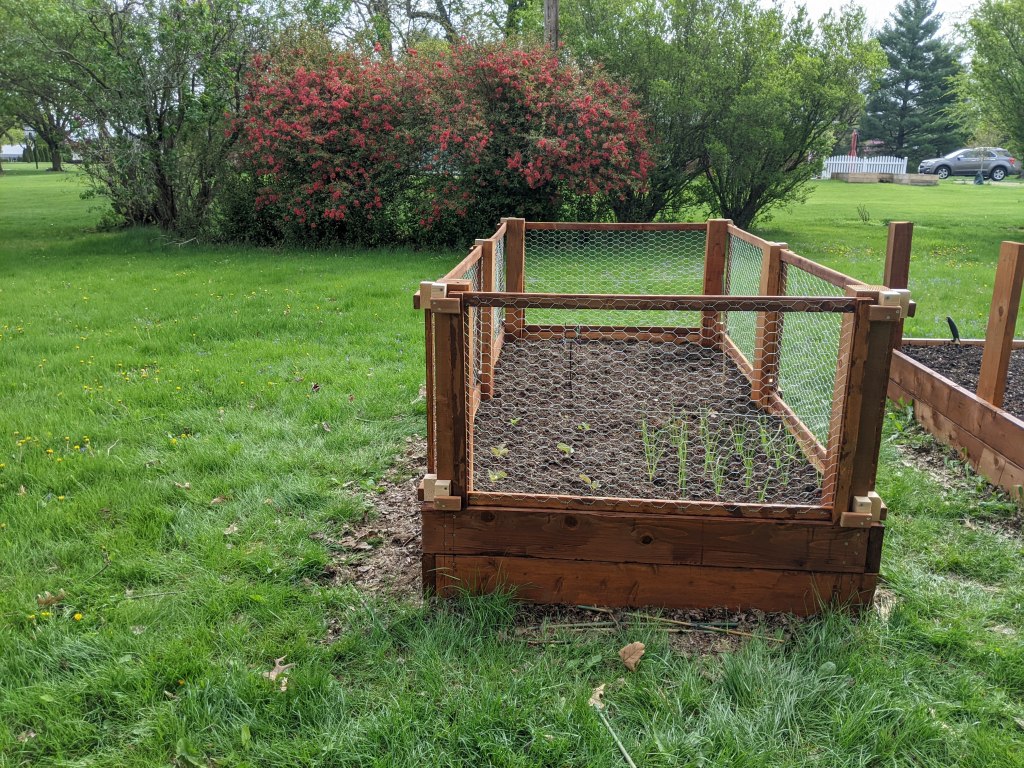
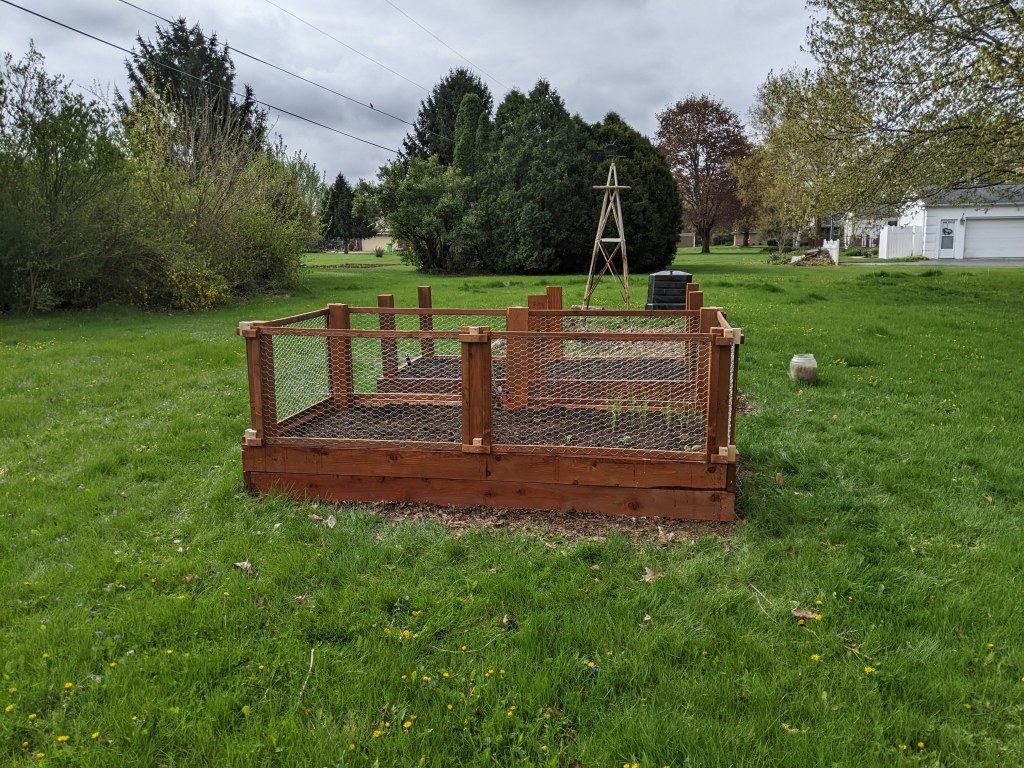
We made 6 fence panels with the 1-in x 2-in x 8-ft Whitewood Furring Strips and chicken wire. The panels for the long sides are a little longer at 3-ft 8-in and the panels for the short side are 3-ft 6-in and both are 2-ft high. The left-over wood scraps to make braces to hold the fence on, we used the 2-in x 6-in x 8-ft Cedar Green Deck Board as a spacer and the Furring strips as and outer brace. Here is the final product:
I hope you found some inspiration in this.
 Our Homesteading Journey
Leave a comment